
Why Is Thatched Cottage Insurance Expensive? Brokers Explain
Why thatched cottage insurance is more expensive than standard home insurance comes down to one thing: insurers see a small, specialist, high‑severity risk that is costly to repair when it goes wrong. Brokers add that limited insurer appetite, older building types and strict fire‑safety expectations all drive premiums up further for owners.
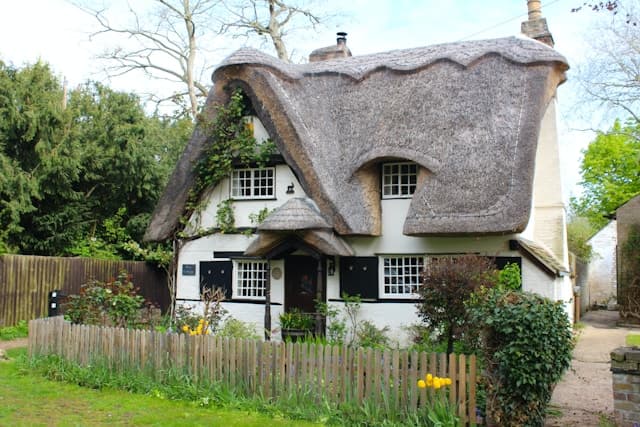
Why thatched cottage insurance is more expensive than standard home insurance comes down to one thing: insurers see a small, specialist, high‑severity risk that is costly to repair when it goes wrong. Brokers add that limited insurer appetite, older building types and strict fire‑safety expectations all drive premiums up further for owners.
Insurers treat thatched roofs as higher fire‑risk because they combine combustible roofing with common ignition sources like chimneys, wood‑burners and open fires. A thatch fire is difficult to control, so when it starts it often results in a total or near‑total loss rather than a small, localised claim.
Common red flags for underwriters include poorly maintained or unlined chimneys, solid‑fuel stoves used daily, historic wiring in loft spaces and infrequent chimney sweeping. From a broker's perspective, even if thatch fires are not daily events, the claims that do occur are large enough to wipe out profit on an insurer's whole thatched book unless premiums are loaded to reflect the risk.
Thatched cottages are usually more expensive to repair or rebuild than a modern brick‑and‑tile home because they need specialist trades and traditional materials. There is a limited pool of skilled thatchers in the UK, and reed or straw for thatching can be costly and subject to supply constraints, which feeds through into higher claims costs. Understanding thatched roof costs per square metre helps explain why rebuild values are so high.
Insurers price on the rebuild cost, not the market value, and thick stone walls, exposed beams and bespoke joinery make like‑for‑like restoration surprisingly expensive even where the sale price looks modest. Brokers frequently see underinsurance on older or thatched properties, so realistic sums insured are often higher than owners expect once a proper rebuild assessment is done.
Many mainstream home insurers either refuse thatched risks or route them via specialist schemes, so the number of active markets is much smaller than for standard homes. Less competition means there is less downward pressure on price, and owners cannot simply compare dozens of quotes on aggregators in the way they might for a typical semi‑detached property.
Specialist thatched underwriters tend to assess each property manually, asking for photos, details of burners and chimneys, and sometimes surveys or reports, which is more expensive than automated, rules‑based underwriting. Brokers working in this niche often have only a handful of realistic options for a given cottage, so when one insurer tightens its appetite or raises rates, prices across the small market can move in step.
A large proportion of thatched cottages in the UK are pre‑1900 and many are Grade II or Grade II* listed, which makes them more complex and costly to insure. Listing brings obligations to use sympathetic materials and methods, and conservation officers may need to be involved in any significant reinstatement, extending claim timescales and costs. If you own a listed property, see our Grade II thatched cottage insurance checklist for guidance on preparing for quotes.
Older structures often feature non‑standard construction such as cob, thick stone or timber framing, irregular extensions and historic alterations that are hard to cost accurately. Brokers note that claims on listed thatched cottages frequently require specialist surveyors and project management, so insurers factor this complexity into their premiums from the outset.
Thatched properties are often located in rural villages or remote countryside, and location plays a real role in how underwriters rate the risk. Greater distance from the nearest fire station, narrow lanes and limited access for fire engines increase the chance that a fire becomes a major or total loss before it can be controlled.
Where local contractors are scarce, emergency works and reinstatement may involve bringing in specialists from further afield, increasing both cost and delay. Insurers use postcode‑based data on fire cover and historical losses, so two superficially similar thatched cottages can attract very different premiums depending on their exact location.
The thatched sector is a relatively small slice of the overall home insurance market, so each large claim has a disproportionate impact on insurers' loss ratios. A run of total‑loss fires or major rebuilds in one season can quickly prompt insurers to reprice their thatched portfolios upwards at renewal.
Because there are comparatively few policies, insurers cannot smooth out results as easily as they can in mass‑market home books, so pricing is more sensitive to recent claims experience. Brokers in this niche regularly see base rates shift across the market after a period of poor results, even where an individual policyholder has a clean personal claims history.
Specialist thatched home policies often include broader cover and higher limits than stripped‑back comparison‑site products, which is another quiet driver of cost. Buildings sums insured are typically set to realistic, sometimes high rebuild figures and may include generous alternative accommodation limits to reflect the time needed to rebuild a complex property.
Many thatched homes also have additional buildings such as barns, outbuildings or annexes, along with period features and higher‑value contents, all of which increase the overall risk exposure. Brokers stress that headline price comparisons can therefore be misleading: once cover scope and sums insured are aligned, the gap between "expensive" thatched insurance and standard home cover is smaller, even if still significant.
While thatched cottage insurance is likely to remain pricier than cover for a modern estate house, owners can take practical steps to improve their risk profile and, in turn, their premiums. Insurers and brokers consistently highlight fire safety, electrical safety and documented risk management as key factors in securing better terms.
On the fire side, regular chimney sweeping, properly installed flue liners, up‑to‑date burners, safe clearances between flue and thatch and, where appropriate, spark arrestors or chimney cowls are all viewed positively. Professional electrical inspections, upgraded consumer units and removal of outdated wiring, particularly in loft areas, can further reassure underwriters that ignition risks are under control. For detailed guidance on chimney regulations for thatched properties, see our comprehensive 2025 guide.
Working with a specialist broker or provider that understands thatched properties helps owners present their risk effectively to insurers. Supplying clear photos, reports and evidence of improvements often leads to more competitive quotes than a bare‑bones proposal submitted through a generalist channel.
Even with strong risk management, thatched cottage insurance will almost always cost more than a policy on a modern brick‑and‑tile home because the potential claim size is much greater and the market is more specialised. A serious thatch fire or major rebuild on a listed cottage can run into six or seven figures, far beyond what most homeowners could fund themselves without insurance.
In that context, the question for an owner is less "Why is it more than my old semi?" and more "Would this policy genuinely rebuild my home as it stands if the worst happened?". By understanding how insurers think about thatched risk, investing in sensible safety measures and using experienced brokers, owners can at least be confident that they are paying a fair price for the specialist protection their property needs.
Get a thatched roof insurance quote
For specialist thatched roof insurance and cover options, see our main page.
Get a thatched roof insurance quote