
Thatched Roof Chimney Regulations 2025
2025 brings strict Ecodesign stove rules, 1.8m chimney height standards, insulated flues, and insurer-driven warranties for thatched properties. Here’s the full regulatory picture and how to comply.
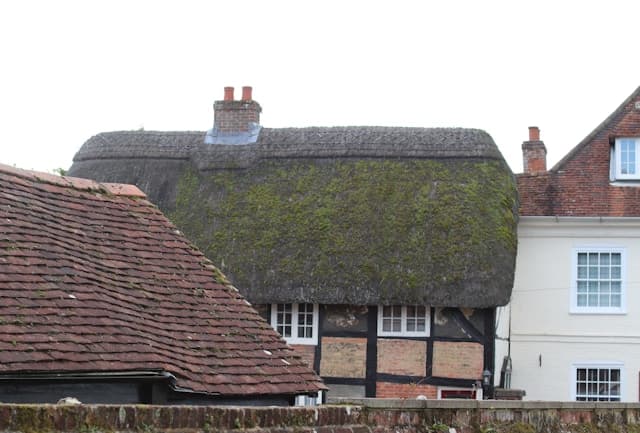
The allure of a thatched cottage is timeless, serving as the quintessential image of the British countryside. However, for owners and prospective buyers in 2025, the reality of living under thatch is governed by an increasingly complex framework of building regulations, environmental standards, and stringent insurance requirements.
This year has marked a definitive shift in how solid fuel heating is regulated across the UK. With the full enforcement of Ecodesign standards as of January 1, 2025, and evolving "best practice" demands from insurers, the margin for error when installing or maintaining a chimney in a thatched property has all but vanished.
This guide details the regulations and requirements for thatched roof chimneys in 2025, specifically tailored for property owners and insurance professionals.
The regulation of chimneys in thatched properties is not governed by a single "Thatch Act." Instead, it is a triangulation of three distinct authorities, each with different priorities: Building Regulations (Approved Document J): These are the legal minimums for safety, focused on preventing the building from catching fire and ensuring inhabitants aren't poisoned by carbon monoxide. Environmental Legislation (The Clean Air Strategy): As of 2025, this strictly controls what you can burn and what appliances you can install. Insurance Warranties: These are often the strictest of all. While a chimney might legally pass Building Regulations, it may fail to meet the "duty of care" clauses in a specialist thatch insurance policy.
In 2025, the headline change is the absolute prohibition on the sale and installation of non-Ecodesign compliant stoves. For thatch owners, who are statistically more likely to use solid fuel heating, this modern standard of stove brings both benefits (cleaner burning) and new risks (higher flue temperatures) that must be managed.
If there is one figure every thatch owner must memorise in 2025, it is 1.8 metres. Under Approved Document J of the Building Regulations, and reinforced by almost every specialist insurer in the UK, the top of the chimney pot must terminate at least 1.8 metres above the flammable ridge material.
The logic is thermodynamic. Sparks and embers ejected from a solid fuel fire need time to cool before they land. By forcing the exit point of the flue 1.8 metres above the thatch, any escaping ember has to travel through cooler air for a longer duration before gravity pulls it down onto the dry reed or straw. That fraction of a second is often the difference between a scorch mark and a devastating roof fire.
Many historic cottages have shorter chimneys, often sitting flush with the ridge or only rising a few courses of brick above it. While Building Regulations are generally not retrospective—meaning you aren't legally forced to rebuild an old chimney just because the law changed—insurance policies are different.
In 2025, it is becoming standard practice for insurers to demand remedial work to meet this 1.8m height as a condition of renewal or new cover. If your chimney is too short, you have two primary options: Extend the Brickwork: A permanent, heritage-compliant solution, though often costly and subject to Listed Building Consent. Install a Tall Pot: Extending the height using a specialized tall chimney pot or a twin-wall insulated flue extension. This is often the preferred route for minimizing structural intervention.
For new builds, extensions, or significant re-thatching works, the "Dorset Model" remains the industry benchmark. Originally developed by local authorities in Dorset, it has effectively become the national best practice guide.
The Dorset Model treats the thatch as "sacrificial." The core philosophy is that if the thatch catches fire, the structure of the house below should be protected long enough for the occupants to escape and for the fire brigade to strip the burning roof without the house collapsing.
Key Dorset Model Requirements for 2025: The Chimney Position: The chimney must be positioned so that it does not terminate close to windows or dormers where smoke could re-enter. Fire Barriers: A fire-resisting barrier (minimum 30 minutes integrity) must be placed over the rafters before the thatch is applied. In 2025, this is typically a heavy-duty specialized membrane. Micro-porous Boarding: To prevent the "sweating" issues seen in earlier decades (where the house couldn't breathe), a micro-porous board is placed under the battens. Rafter Insulation: The void between rafters is insulated with mineral wool, but a 50mm air gap is usually maintained to ensure airflow.
If you are undertaking a "re-ridge" or "re-thatch" in 2025, check if your insurer requires you to upgrade to Dorset Model standards. Many policies now offer "betterment" clauses where they will pay for the fire barrier installation during a claim repair.
The debate between open fires and wood burners has settled in 2025, with regulations pushing heavily towards closed appliances—but with a catch.
Open fires are inefficient and generate massive amounts of sparks. In a thatched property, they are high-risk. The draft velocity is lower than a stove, meaning sparks drift lazily out of the chimney rather than being shot high up. However, they burn cooler, meaning the physical brickwork of the chimney doesn't get as hot.
As of January 1, 2025, any new stove installed must be Ecodesign Ready. These stoves are incredibly efficient (often 80%+), burning fuel at very high temperatures to incinerate particulate matter.
The Risk: The flue gases in an Ecodesign stove can be exceptionally hot. If such a stove is installed into an old, unlined single-skin brick chimney, the heat can transfer through the bricks (conduction) and ignite the thatch where it touches the chimney stack. This is known as Heat Transfer Theory. The thatch doesn't need a spark to catch fire; it just needs the bricks to get hot enough (over 200°C) to cause the dry straw to auto-ignite or smoulder.
Therefore, in 2025, you generally cannot install a wood burner in a thatched property without a twin-wall insulated flue liner. The liner acts as a thermos flask, keeping the heat inside the flue and stopping it from soaking into the chimney stack.
The installation of a liner is the single most effective safety upgrade for a thatched property. However, the type of liner is critical.
Flexible Steel Liners: These are common but are essentially just a single skin of steel. They prevent gas leaks but offer minimal thermal insulation. Twin-Wall Rigid Systems: These are the standard for thatch. They consist of two metal walls with a layer of insulation sandwiched between them.
For a thatched property in 2025, the regulations (and common sense) dictate that the chimney stack passing through the thatch should be insulated. If you cannot install a twin-wall system (perhaps due to a narrow flue), a flexible liner can be used, but it is often required to be backfilled with pumped lightweight insulation (like vermiculite) to create that thermal barrier between the hot liner and the old brickwork.
For decades, homeowners were told to fit "spark arrestors"—wire mesh cages that sit on top of the chimney pot to catch embers.
In 2025, the advice from fire services and HETAS is explicitly: DO NOT USE THEM. The reasoning is simple: Spark arrestors clog. In a wood-burning system, tar and soot build up on the mesh rapidly. This restricts the airflow, causing the flue gases to slow down and get hotter, which increases the risk of a chimney fire. Worse, if the mesh clogs completely, it can force Carbon Monoxide back into the home.
Despite this clear technical advice, you may still find legacy clauses in some insurance policies demanding spark arrestors. This is a dangerous contradiction. If your policy demands one, you must challenge it or clarify it. Most modern specialist insurers have removed this requirement, or replaced it with a requirement for a "bird guard" (which has a wider mesh that doesn't clog as easily) rather than a spark arrestor.
If you must have one to satisfy a stubborn underwriter, the maintenance requirement becomes onerous: it likely needs to be removed and cleaned every 3 months during the burning season.
In 2025, "once a year" is no longer the safe default for chimney sweeping in thatched homes.
Building Regulations typically suggest annual sweeping for smokeless fuel and bi-annual for wood. However, insurance warranties override this. A typical 2025 thatch policy clause will read: “Chimneys to be swept by a HETAS or NACS qualified sweep prior to the winter season. If wood is burnt, sweeping must occur mid-season (e.g., January).”
Failure to produce a sweeping certificate that covers the date of a fire is the primary reason for non-payment of claims.
It is not enough to just sweep the chimney. You must prove it. In 2025, digital certificates from associations like the Guild of Master Chimney Sweeps or HETAS are the standard proof. A cash-in-hand job with no paperwork effectively renders your insurance void.
Insurers are increasingly asking for a CCTV flue inspection every 3 to 5 years. This involves a camera being lowered down the flue to check for: Breaches in the liner. Tar glazing (which creates a massive chimney fire risk). Structural integrity of the brickwork where it passes through the thatch.
A crucial update for 2025 affects readers in Scotland. Previously, the New Build Heat Standard (NBHS) effectively banned wood burners in new build Scottish homes. However, following significant backlash from rural communities concerned about power resilience, this ban was reversed effective January 1, 2025.
This means that in Scotland, you can once again design a new build thatched cottage with a wood burner, provided it meets the strict emissions standards. This divergence creates a unique regulatory environment north of the border, but the safety principles (1.8m height, insulation) remain identical to the rest of the UK.
The "Ready to Burn" legislation is now fully mature in 2025. This regulation, enforced by DEFRA, means: Wet Wood is Illegal to Sell: You cannot buy wood in small units (under 2m³) with a moisture content higher than 20%. Traditional Coal is Banned: Bituminous house coal is no longer legally sold for domestic heating.
For thatch owners, this is actually good news. Wet wood creates tar, and tar causes chimney fires. By forcing the use of dry wood (kiln-dried or seasoned), the regulations inadvertently protect thatched roofs by reducing the likelihood of the intense, roaring chimney fires that eject heavy embers.
However, owners must be vigilant about "scavenged" wood. Burning wood from your own garden that hasn't been seasoned for 2 years is technically not illegal (you can burn what you like from your own land), but it is highly dangerous for a thatched property and could be seen as "negligence" by an insurer if a fire results.
While not strictly a "chimney" regulation, the interaction between the chimney and the electrical wiring in the loft is a key 2025 focus. The roof void of a thatched property is a tinderbox.
Wiring regulations (BS 7671) and insurance clauses now typically demand: No Joints in the Loft: Wiring runs through the thatch void should be continuous. Junction boxes are potential spark points. Rodent Protection: Wiring should be in conduit (metal or heavy-duty plastic) to prevent rats or mice from chewing through insulation and causing an arc. Distance from Chimney: Wiring must be kept at a significant distance from the chimney stack to prevent heat degradation of the cable insulation.
If you own or insure a thatched property in 2025, use this checklist to ensure compliance: Chimney Height: Does the pot terminate at least 1.8m above the ridge? Liner: If using a wood burner, is there a twin-wall insulated liner in place? Appliance: If installed post-2022 (and certainly in 2025), is it Ecodesign Ready? Fuel: Are you burning “Ready to Burn” certified wood (<20% moisture)? Protection: Is the chimney fitted with a bird guard (not a spark arrestor)? Sweeping: Do you have a certificate from the last 6-12 months? Alarms: Are Carbon Monoxide alarms fitted in every room with a solid fuel appliance (a legal requirement)?
The "Thatched Roof Chimney Regulations 2025" are less about a single new government decree and more about the convergence of high-efficiency technology with low-tolerance risk management. The romantic image of the thatched cottage remains, but the infrastructure keeping it warm has changed.
For the homeowner, the message is clear: The era of the "casual" open fire is over. High-performance stoves, insulated flues, and rigorous professional maintenance are the price of admission for enjoying a real fire under a reed roof in 2025. By adhering to the 1.8m rule and the principles of the Dorset Model, owners can ensure their heritage homes remain standing for centuries to come, fully insured and safe.
Get a thatched roof insurance quote
For specialist thatched roof insurance and cover options, see our main page.
Get a thatched roof insurance quote